

“War compresses time. It distorts truth. It fractures trust. And in those moments, when fear moves faster than facts, story becomes oxygen.” -Kim I Plyler
As I sit with messages from friends who are reporters, photographers, documentarians, and storytellers, some in Israel, some in Iran, some here in the United States, I am reminded of something essential: information must flow. Not as propaganda. Not as performance. But as lived experience. As witness. As human testimony. Because when stories stop moving, humanity starts disappearing.
The Responsibility to BE HEARD
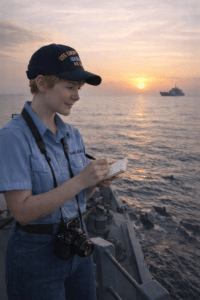
Kim Sahlberg Navy Journlist reporting from Red Sea in 1988
Throughout history, the preservation of truth has depended on ordinary people who chose to BE HEARD. During World War II, journalists embedded with troops documented not just strategy, but suffering. Without war correspondents like Ernie Pyle, the public would not have understood the emotional toll on soldiers in Europe and the Pacific. When the world began to grasp the horror of the Holocaust, it was because survivors, diarists like Anne Frank, and later investigative reporters ensured the truth did not disappear into silence. During the Vietnam War, images and reporting changed public opinion. The war did not just unfold on foreign soil; it entered American living rooms through the press. Information shifted policy. Testimony reshaped history. And on September 11, 2001, as the September 11 attacks unfolded, journalists and everyday citizens documented events in real time. Those recordings now form part of our collective memory.
History shows us this: when stories survive, truth survives.
Why Hearing From the Ground Matters Now
Today, the speed of information is both a gift and a threat. We live in an era of instant uploads and algorithmic narratives. Headlines move markets. Clips move emotions. But understanding? That requires something slower. Something relational. When I hear directly from friends reporting in Israel, or from reporters navigating daily life in Iran, or from journalists covering unrest here in the United States, I’m not receiving a headline. I’m receiving context. Tone. Texture. Fear. Courage.
That kind of insight cannot be manufactured. It must be witnessed. The difference between commentary and lived reporting is profound. One is reactive. The other is rooted in presence. When reporters stand in the midst of uncertainty, they are not just delivering facts, they are transmitting human reality. And that reality helps us resist manipulation. Learn More
The Danger of Silence
Silence in wartime is never neutral. When information channels close, rumor expands. When journalists are silenced, propaganda thrives. When fear dominates, nuance disappears. Authoritarian regimes throughout history have understood this. Control the narrative, control perception. Control perception, control power. That is why the free press has long been called the fourth estate. And that is why the work of reporters—many of whom I call friends—is not optional. It is foundational.
To Shed Light Is to Protect Humanity
To Shed Light is not to inflame conflict. It is to illuminate truth. Light allows us to see suffering clearly. Light allows us to distinguish fact from distortion. Light allows empathy to form. Wishing for peace does not mean turning away from reality. In fact, real peace depends on informed awareness. We cannot move toward reconciliation if we refuse to understand what is happening. Peace built on ignorance is fragile. Peace built on truth is durable. Learn More
Vigilance Is Not Violence
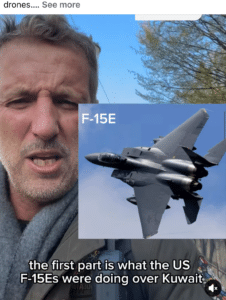
Mikey Kay reporting on current security issues
There is a difference between warmongering and vigilance. Vigilance means asking: Are journalists safe? Are stories being suppressed? Are voices being erased? It means supporting those who risk their lives to document events. It means listening beyond our comfort zones. It means reading across perspectives. It means creating space for stories to BE HEARD. Because every time a reporter shares footage from a tense border, every time a citizen journalist uploads testimony, every time a storyteller captures the human cost of conflict, they are preserving more than information. They are preserving memory.
Why This Matters Personally
I am surrounded by storytellers. By reporters who step into complexity. By friends who send voice notes from uncertain environments. By colleagues who believe truth-telling is sacred work. Hearing from them grounds me. It reminds me that behind geopolitical analysis are families. Behind military strategy are children. Behind rhetoric are real human lives navigating fear, resilience, and hope. When we stay connected to those on the ground—whether in Israel, Iran, or here in the U.S. we resist oversimplification. We resist dehumanization. We stay awake.
The Call
In times of war, information is not just data. It is lifeline. We must protect the flow. We must protect the storytellers. We must protect the ability to Shed Light. And we must encourage one another to BE HEARD! responsibly, truthfully, courageously. May we long for peace. May we work toward peace. But until peace is fully realized, may we refuse silence. Because when truth moves freely, humanity has a fighting chance.