
Having worked as a journalist for a large part of my career nothing is more sacred as freedom of speech/press. I also write this while holding Daniel Pearl in my heart. Journalists have always worked on the front lines of history. Daniel was a kind soul. A true warrior with a poets heart. Part of the team. Today journalists continue to taken on frontlines everywhere.
They enter war zones, stand amid violent protests, report from disaster areas, uncover corruption, and ask difficult questions in rooms where powerful people would often prefer silence. Some risk their safety,
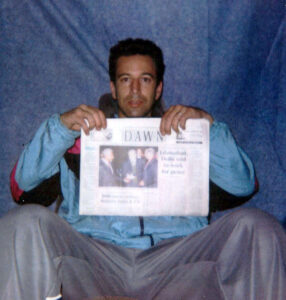
Reporter Daniel Pearl
and sometimes their lives, so the rest of us can understand what is happening beyond the walls of our own homes.
But here in the United States, journalists are increasingly facing a different kind of war: a war against their credibility, their access, their independence, and, at times, their personal safety.
The First Amendment says that government shall make no law abridging freedom of speech or freedom of the press. Those words were not added casually. The founders understood that a free society cannot survive if those holding power are permitted to control who may question them, what information may be published, or which truths the public is allowed to hear. (constitution.congress.gov, constitution.congress.gov)
The job of a journalist is not to make elected officials comfortable. It is not to act as a public-relations department for government, corporations, political parties, or popular movements. Nor is it to manufacture outrage simply to attract attention.
A journalist’s job is to seek the truth, verify the facts, provide context, question authority, expose wrongdoing, document history, and give people the information they need to make their own informed decisions.
That responsibility applies regardless of who occupies the White House, which party controls Congress, or whether the journalist personally agrees with the people being covered. Real journalism must be willing to scrutinize everyone.
Journalists are human. They can make mistakes. News organizations can demonstrate bias, exercise poor judgment, or lose the public’s trust. We have every right to question their reporting, demand corrections, compare sources, and hold them accountable. Freedom of the press does not mean freedom from criticism.
But criticism is profoundly different from intimidation.
Calling every unfavorable report “fake news,” treating questions as acts of disloyalty, restricting access because coverage is critical, threatening reporters, or encouraging the public to view journalists as enemies creates a dangerous climate. In 2026, Reporters Without Borders ranked the United States 64th in its World Press Freedom Index, citing growing political pressure and legal actions against the press. (rsf.org, rsf.org)
When access to government is granted or denied according to whether coverage is flattering, the public loses more than a news story. We lose an independent set of eyes inside the institutions that act in our name.
The First Amendment does not belong only to reporters or media companies. It belongs to all of us. Journalists exercise press freedom on the public’s behalf, asking questions most citizens will never have the opportunity to ask directly.
We do not have to agree with every journalist. We do not have to trust every publication. But we must defend the right of responsible journalists to investigate, question, witness, and report without fear of retaliation.
A free press will sometimes frustrate us. It will publish information that challenges our beliefs. It may expose failures within the political party we support or give voice to people we oppose. That discomfort is not evidence that journalism has failed. Often, it means journalism is doing exactly what democracy requires.
The true test of our commitment to the First Amendment is not whether we defend reporting we like. It is whether we defend the freedom to report when the questions are difficult, the findings are inconvenient, and the truth makes those in power uncomfortable.
Journalists do not merely record history.
They help prevent history from being rewritten by those with the most power to do so.